

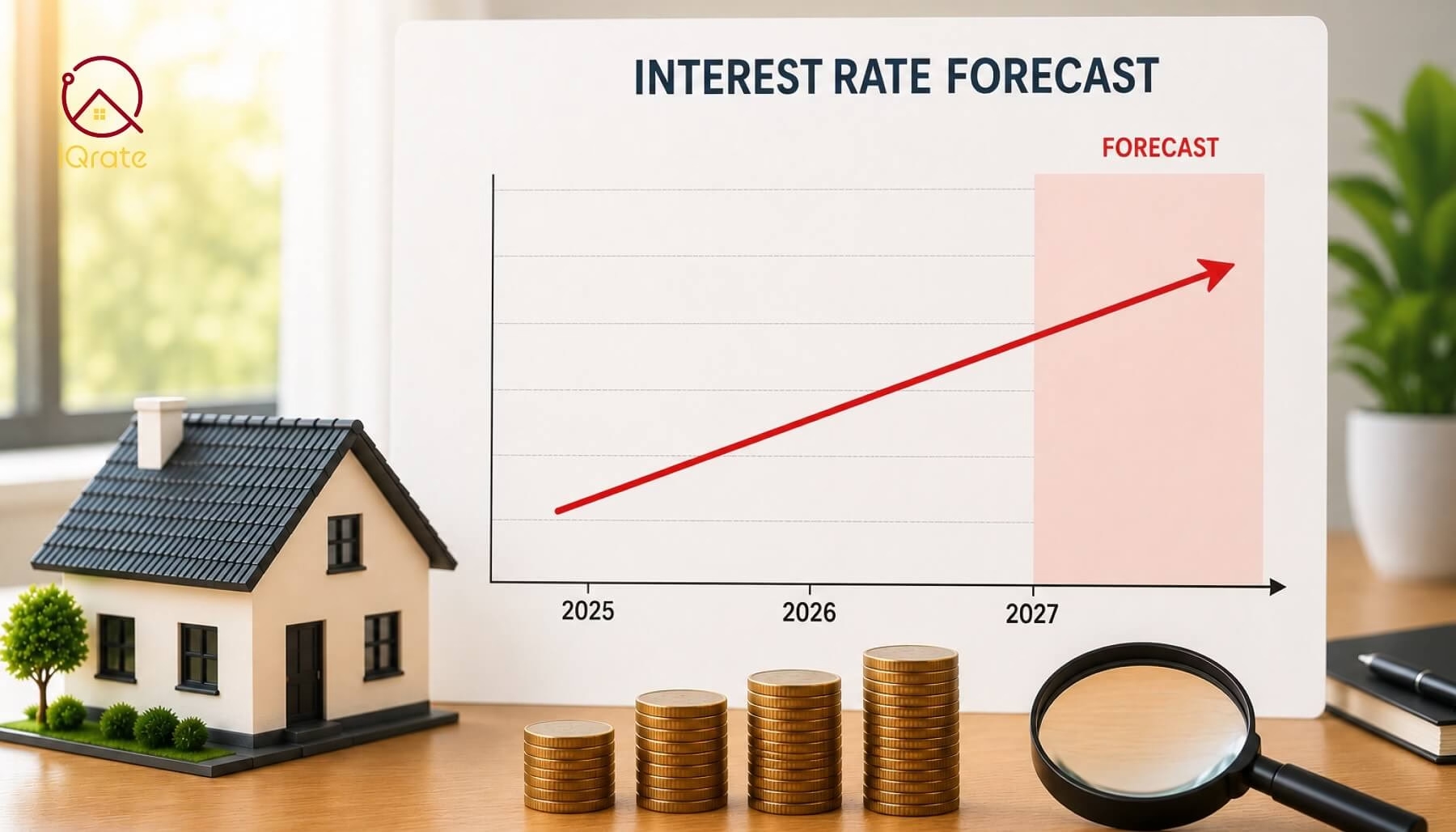
For much of the past year, many homeowners have been waiting for mortgage rates to fall.
The general expectation was straightforward. As inflation cooled and major central banks began easing monetary policy, borrowing costs would gradually decline. In turn, Singapore mortgage rates were also expected to soften.
However, as we move further into 2026, that outlook is becoming far less certain. A growing number of economists and institutional investors are now considering another possibility:
What if SORA moves higher again next year?
For homeowners servicing SORA floating rate home loans, this is not just an economic discussion. A higher SORA environment could increase monthly repayments, reduce refinancing opportunities, and place greater pressure on household cash flow.
Here are some key reasons why Singapore borrowers should continue monitoring interest rate risks closely.
Why Markets Initially Expected Mortgage Rates to Fall
Throughout 2025 and early 2026, markets were pricing in eventual interest rate cuts from the US Federal Reserve.
Several factors largely drove the reasoning:
- Inflation appeared to be moderating
- Economic growth was slowing
- Labour markets were expected to weaken
- Central banks were expected to shift toward easing policies
Under this scenario, global funding costs would gradually decline, helping to reduce borrowing costs in Singapore as well. That would likely bring relief to homeowners after several years of elevated mortgage repayments.
Why Inflation Could Keep Interest Rates Elevated
The biggest risk to lower mortgage rates is that inflation may remain more persistent than expected.
Several global developments continue to create inflationary pressure.
Rising Energy Prices
Geopolitical tensions and supply disruptions have already pushed oil prices higher in recent months.
If energy prices remain elevated, inflation could accelerate again globally. Higher energy costs often affect transportation, food prices, manufacturing costs, and overall consumer inflation expectations.
This is important because central banks remain highly sensitive to inflation risks.
Stronger Than Expected US Labour Market
Although the US labour market has cooled from previous highs, wage growth remains relatively resilient.
Strong wage growth supports consumer spending and can keep inflation elevated for longer periods.
If inflation remains stubborn, the Federal Reserve may delay interest rate cuts or potentially consider additional hikes if economic data remains strong.
Structural Inflation Pressures
Global supply chain restructuring, reshoring initiatives, and deglobalisation trends are also contributing to more structural inflation pressures worldwide.
This could mean the ultra low interest rate environment seen during the 2010s may not return anytime soon.
Why US Interest Rates Affect Singapore Mortgages
Singapore’s monetary policy framework differs from the United States.
The Monetary Authority of Singapore primarily manages monetary policy through the Singapore dollar exchange rate rather than directly setting domestic interest rates.
However, global funding costs still play a major role in determining local borrowing costs.
When US interest rates remain elevated:
- Bank funding costs increase
- Interbank borrowing costs rise
- SGD liquidity tightens
- SORA floating rate may remain elevated or move higher
This is why Singapore homeowners should not focus only on local policy announcements. Global interest rate conditions continue to heavily influence mortgage pricing in Singapore.
Markets Are Preparing for a Higher for Longer Environment
One of the clearest signals today comes from global money markets.
Large amounts of capital continue to remain parked in cash and money market funds. This suggests that many institutional investors are still cautious about expecting aggressive interest rate cuts in the near term.
Instead, markets are increasingly positioning for a “higher for longer” interest rate environment.
If inflation surprises to the upside again, expectations could shift toward renewed rate hikes, which would place additional upward pressure on SORA.
The Impact of Higher SORA Floating Rates
If SORA rises again next year, homeowners with floating rate mortgages could face several challenges.
Higher Monthly Repayments
Even small increases in interest rates can significantly affect monthly repayments, especially for larger loan amounts.
For homeowners with tighter monthly cash flow, this could become financially stressful.
Reduced Refinancing Opportunities
Banks may become less aggressive in offering competitive mortgage packages if funding costs remain elevated.
Waiting too long for “better rates” may end up becoming an expensive decision.
Increased Financial Pressure
Borrowers who purchased properties based on lower interest rate assumptions may face greater repayment pressure if rates remain elevated for a prolonged period.
What Homeowners Can Consider Doing Now
Instead of trying to predict exactly where interest rates will move next, homeowners may benefit more from preparing early.
Review Your Current Mortgage Package
Consider reviewing:
- Whether your loan is heavily exposed to SORA floating rate volatility
- Whether your current spread remains competitive
- Whether repricing or refinancing opportunities are available today
Stress Test Your Monthly Repayments
Ask yourself whether your household finances can comfortably handle:
- 0.25% increase in rates
- 0.50% increase in rates
- 1.00% increase in rates
If repayment pressure already feels uncomfortable, it may be worth reviewing your mortgage loan structure earlier rather than later.
Why Working With a Professional Singapore Mortgage Broker Matters
In uncertain interest rate environments, having a clear mortgage strategy becomes increasingly important.
An experienced Singapore mortgage broker can help homeowners:
- Compare available refinancing and repricing packages across multiple banks
- Understand the risks between fixed and floating rate structures
- Evaluate lock in periods, spreads, and long term repayment costs
- Monitor market conditions and identify suitable refinancing windows
- Structure loans based on financial goals and risk tolerance
Rather than focusing purely on securing the lowest headline rate, professional mortgage advice should also consider long term flexibility, cash flow management, and financial resilience.
Final Thoughts
For many borrowers, lower mortgage rates once appeared inevitable.
Today, the situation looks far more uncertain. Persistent inflation, resilient labour markets, and ongoing global supply disruptions are increasing the possibility that SORA floating rate could remain elevated or even move higher again in 2027.
For Singapore homeowners, preparation matters far more than prediction. The difference between financial flexibility and financial strain often comes down to whether your mortgage strategy is prepared for changing market conditions.
At IQrate, homeowners can compare mortgage loan packages across multiple banks while receiving guidance tailored to their financial situation and refinancing goals at no cost!