


Singapore’s Executive Condominium (EC) market is undergoing its biggest transformation in decades. On 8 May 2026, the Government announced a series of policy changes that will reshape how future Executive Condominiums are bought, owned and sold. These NEW EC Rules are designed to bring ECs back to their original purpose, helping genuine owner-occupiers and first-time homebuyers access private housing at a more affordable price.
The changes will apply to new EC projects built on Government Land Sale (GLS) sites with tender closing dates on or after 8 May 2026. As a result, most EC launches from the second half of 2026 onwards are expected to fall under the revised framework.
For first-time buyers, HDB upgraders and families considering an EC purchase, understanding these new regulations could make a significant difference to your housing plans and financing strategy.
What Are the New EC Rules?
The Government’s latest EC policy changes focus on discouraging short-term speculation while giving greater priority to first-time homeowners.
Here are the five major changes every buyer should know.
1. Minimum Occupation Period (MOP) Extended from 5 Years to 10 Years
One of the most impactful changes under the New EC Rules is the extension of the Minimum Occupation Period (MOP).
Previously, EC owners could sell their units on the open market after fulfilling a five-year MOP. Under the new framework, buyers must now occupy their EC for 10 years before they can sell it on the open market.
What This Means for Buyers
- Longer holding period before realising capital gains
- Reduced appeal for speculative investors
- Greater emphasis on genuine home ownership
- Fewer EC units entering the resale market
For families purchasing an EC as their long-term residence, this change may have limited impact. However, buyers who previously viewed ECs as a stepping stone to build wealth through a five-year exit strategy will need to adjust their expectations.
The longer MOP effectively shifts ECs closer to owner-occupation rather than investment-focused assets.
2. Full Privatisation Delayed from 10 Years to 15 Years
Under the previous EC framework, developments became fully privatised after 10 years, allowing foreigners and corporate entities to purchase units.
Under the New EC Rules, full privatisation will only take place after 15 years.
What This Means
- A longer restricted ownership period
- Reduced exposure to foreign buyer demand
- Potential moderation in long-term price appreciation
- ECs remain focused on local homeowners for a longer period
This change reinforces the Government’s intention to preserve executive condominium as a housing solution for Singaporeans rather than a property investment vehicle.
While existing ECs will continue to follow the previous timeline, future EC launches will operate under a significantly longer transition period before entering the fully private market.
3. Deferred Payment Scheme (DPS) Removed
For many buyers, the removal of the Deferred Payment Scheme (DPS) may be the most significant change of all.
Previously, EC purchasers could make a smaller upfront payment and defer the bulk of their mortgage obligations until the project received Temporary Occupation Permit (TOP).
Moving forward, only the Progressive Payment Scheme (PPS) will be available.
What This Means
- Financing must be secured much earlier
- Stronger cash flow planning is required
- Less flexibility for HDB upgraders
- Loan eligibility becomes increasingly important
Many HDB upgraders relied on DPS to bridge the gap between their existing property and a new EC purchase. Without this option, buyers may need to carefully plan the sale of their HDB flat, CPF utilisation and financing arrangements well before committing to a purchase.
This is likely to increase the importance of mortgage advisory and financial planning during the EC buying process.
4. First-Timer Quota Increased from 70% to 90%
In a move aimed at improving affordability and accessibility, the Government has increased the allocation quota for first-time buyers.
Previously, 70% of EC units were reserved for first-timer applicants during the initial launch phase. Under the New EC Rules, this quota increases to 90%.
What This Means
- Better opportunities for first-time buyers
- Less competition from second-timers
- Improved access for younger families
- Higher chances of securing a unit during launch
The change addresses a growing concern that many first-time buyers were being priced out by more financially established second-timer applicants.
For young families seeking their first home, this policy is likely to improve their chances significantly.
5. Stricter Access for Second-Timers
Second-time buyers will face additional restrictions before they can access any remaining EC inventory.
This further strengthens the priority given to first-time applicants and reinforces the social objectives behind the EC scheme.
What This Means
- Longer waiting periods for second-timers
- Reduced purchasing opportunities during launch
- Greater competition for remaining inventory
- Increased emphasis on first-time homeownership
For existing HDB owners hoping to upgrade to an executive condominium, planning ahead may become increasingly important as access to future launches becomes more restricted.
Who Benefits Most from the New EC Rules?
Every policy change creates winners and losers.
Likely Winners
✔ First-time homebuyers
✔ Young families
✔ Genuine owner-occupiers
✔ Buyers seeking long-term housing stability
Likely Losers
✘ Property investors
✘ EC flippers
✘ Second-time buyers
✘ HDB upgraders relying on DPS financing
Overall, the Government appears focused on ensuring ECs serve their intended purpose as affordable private housing rather than investment-driven assets.
Key Policy Changes at a Glance
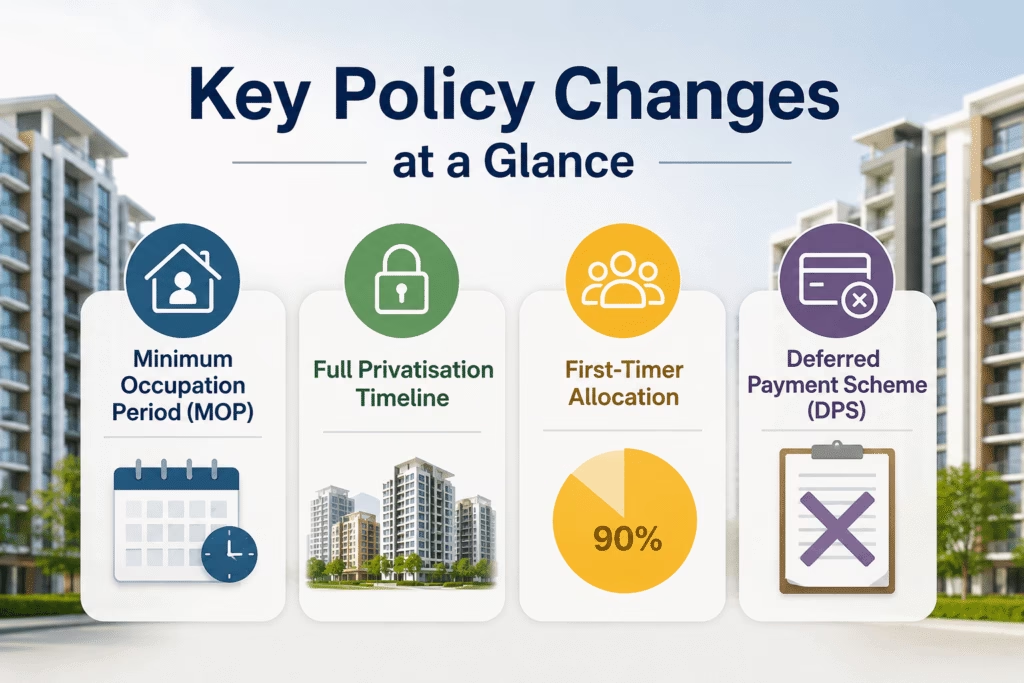
| Policy Area | Previous EC Rules | NEW EC Rules (From 2H 2026) |
|---|---|---|
| Minimum Occupation Period (MOP) | 5 years | 10 years before resale on the open market |
| Full Privatisation | After 10 years | After 15 years |
| First-Timer Allocation | 70% during launch period | 90% during launch period |
| Deferred Payment Scheme (DPS) | Available | Removed, only Progressive Payment Scheme (PPS) will be available. |
| Second-Timer Access | Existing allocation rules | Stricter restrictions and reduced priority |
Should You Buy an EC Before the New EC Rules Take Effect?
The transition period between old-rule ECs and new-rule ECs could create a unique window of opportunity.
Projects launched under the previous framework continue to enjoy:
- 5-year MOP
- Full privatisation after 10 years
- Availability of DPS (where offered by developers)
- Greater flexibility for future exit strategies
As awareness of the New EC Rules grows, these existing EC projects may attract greater demand from buyers seeking the advantages of the previous framework before it disappears permanently.
For many buyers, the next 12 to 24 months could represent the final opportunity to purchase an EC under the more flexible rules that have existed for decades.
Which Upcoming EC Projects Are Not Affected by the New EC Rules?
One of the most important details is that not every upcoming EC launch will be subject to the new regulations.
The Government has confirmed that the New EC Rules only apply to EC sites with GLS tenders closing on or after 8 May 2026.
Several projects secured before the cut-off date are expected to remain under the existing framework.
EC Projects Expected to Remain Under Existing Rules
| Project | Location | Estimated Launch |
| Aurelle of Tampines | Tampines Street 62 | Launched 2025 |
| Rivelle Tampines | Tampines Street 95 | Launched 2026 |
| Otto Place EC | Tengah Plantation Close | Launched 2025 |
| Coastal Cabana EC | Pasir Ris | 2026 |
| Woodlands EC | Woodlands Drive 17 | Q4 2026 |
| Sembawang EC | Sembawang Road | Q4 2026 |
| Senja Close EC | Bukit Panjang | Q4 2026 |
| Woodlands EC (Second Site) | Woodlands Drive 17 | 2027 |
| Miltonia Close EC | Yishun | 2027 |
These developments are expected to continue benefiting from:
- 5-year MOP
- Full privatisation after 10 years
- Potential DPS availability
- Existing first-timer and second-timer allocation rules
By contrast, projects such as Canberra Drive EC and Sembawang Drive EC are among the first expected to fall under the revised framework.
Why Existing EC Launches May Become More Valuable
The market may increasingly view “old-rule” ECs as scarce opportunities.
Buyers purchasing these projects can still enjoy:
- Earlier exit flexibility after five years
- Faster route to full privatisation
- Potentially stronger resale liquidity
- Deferred Payment Scheme options
As a result, these developments could attract heightened interest from both first-time buyers and HDB upgraders looking to secure the benefits of the previous framework.
How IQrate Can Help You Navigate the New EC Rules
With the removal of DPS and longer holding periods, securing an Executive Condominium is no longer just about finding the lowest mortgage rate.
Today’s buyers need to evaluate:
- Loan affordability under changing interest rates
- Cash flow requirements during construction
- CPF usage strategies
- HDB disposal timelines
- Mortgage optimisation opportunities
- Long-term exit planning
At IQrate, we help homebuyers compare home loan rate packages across multiple banks, assess affordability accurately and structure financing solutions tailored to their property goals.
As Singapore’s EC landscape evolves under the New EC Rules, proper mortgage planning may become the difference between securing your ideal home and missing a valuable opportunity. Speak to an IQrate Mortgage Broker should you require any assistance.
Frequently Asked Questions About the New EC Rules
When do the New EC Rules take effect?
The changes apply to EC projects built on GLS sites with tender closing dates on or after 8 May 2026. Most launches from the second half of 2026 onwards are expected to be affected.
Can future EC buyers still use the Deferred Payment Scheme?
No. Under the new framework, only the Progressive Payment Scheme (PPS) will be available for future EC launches.
Will existing EC projects be affected?
No. EC developments secured before the cut-off date are expected to continue operating under the existing rules.
Is buying an EC before the New EC Rules take effect a good idea?
Many buyers may find existing EC launches attractive because they continue to enjoy a shorter MOP, earlier privatisation timeline and DPS flexibility. However, suitability depends on individual financial circumstances and housing goals.