

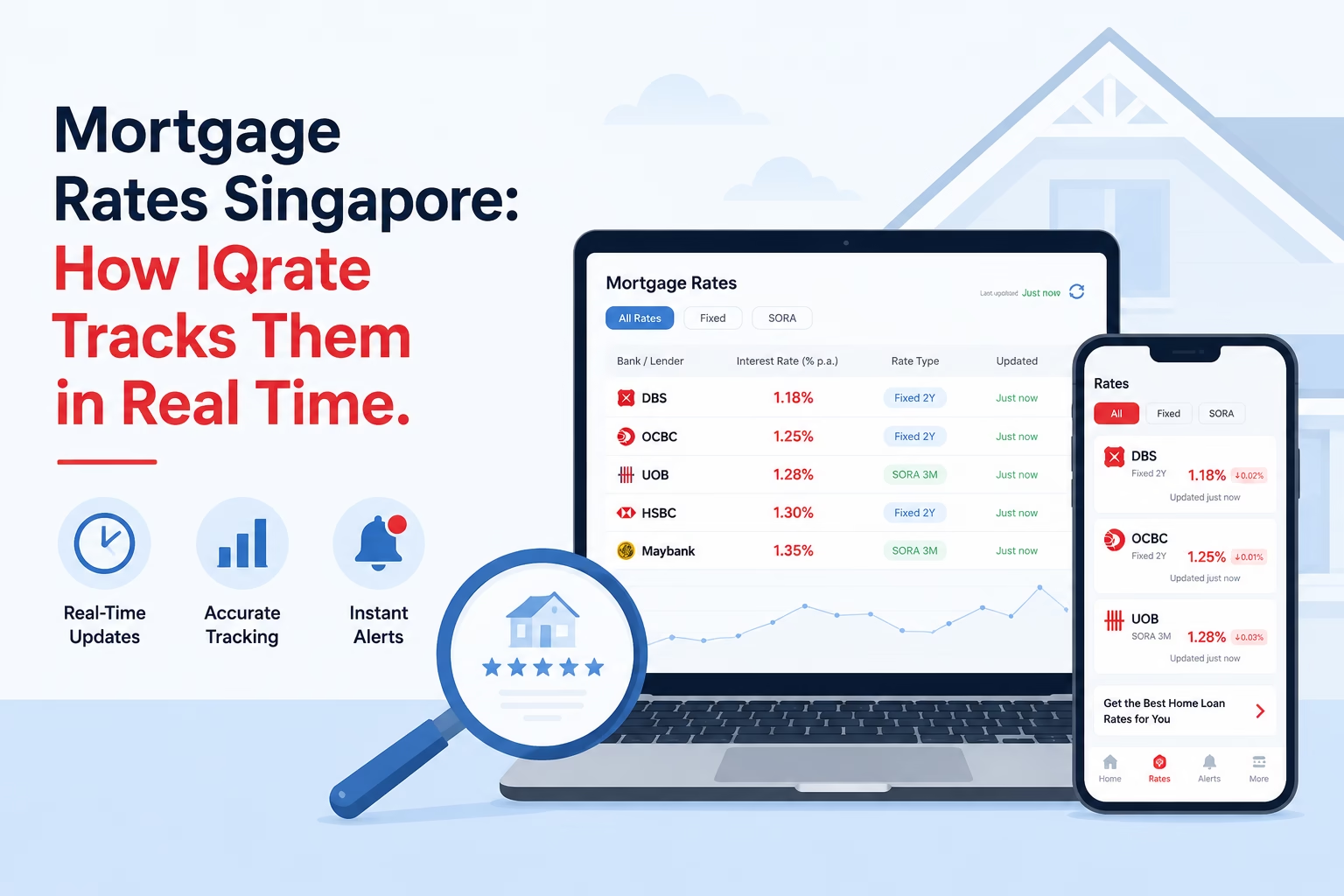
Mortgage rates Singapore homeowners see advertised on a bank’s website are often outdated within days, sometimes even hours, which is exactly why so many borrowers end up overpaying without realising it.
Between shifting SORA movements, limited-time bank promotions and constantly changing spreads, keeping track of the best mortgage rates Singapore 2026 has to offer has become a full-time job that most homeowners simply don’t have time for.
That’s the exact problem IQrate was built to solve.
Instead of relying on a rate table last updated weeks ago, IQrate continuously pulls live pricing data so home loan rate Singapore borrowers are comparing reflect what banks are offering today, not what they offered last quarter.
In this guide, we’ll break down how home loan rates Singapore move, why real-time tracking matters more than ever in 2026, and how IQrate’s platform gives homeowners and prospective buyers an accurate, side-by-side view of housing loan interest rates Singapore banks are currently quoting.
Quick Summary
If you only take away five things about mortgage rates Singapore in 2026, remember these:
- Home loan pricing changes constantly, driven mainly by SORA movements and individual bank spreads.
- SORA mortgage rates are published daily, but the compounded rate used for instalments moves more smoothly.
- Static rate comparison tables go outdated fast; real-time tracking is now essential for an accurate home loan comparison Singapore-wide.
- Fixed vs floating mortgage rates Singapore is a decision that depends on your risk appetite, not just the headline number.
- IQrate’s platform tracks bank home loan comparison Singapore data live, helping you identify the lowest home loan interest rate Singapore has to offer for your profile.
Why Mortgage Rates in Singapore Change So Often
Understanding housing loan interest rates Singapore banks quote starts with understanding what actually drives them.
Most floating-rate home loans in Singapore are pegged to SORA (Singapore Overnight Rate Average), a benchmark published daily by MAS based on real overnight interbank transactions. On top of SORA, each bank adds its own spread, which reflects funding costs, liquidity and how aggressively that bank wants to grow its loan book that quarter.
Fixed-rate packages move differently. Banks price fixed-rate home loans based on swap markets and future rate expectations, not today’s SORA print, which is why fixed and floating rates don’t always move in the same direction at the same time.
Add limited-time promotions, legal subsidy clawback periods, and repricing incentives into the mix, and it becomes clear why a rate table that isn’t updated daily can quickly mislead a borrower.
How IQrate Tracks Mortgage Rates Singapore in Real Time
This is where IQrate’s real-time mortgage rate platform changes the game for homeowners.
Rather than manually calling banks or scrolling through outdated blog posts, IQrate’s SmartMatch AI continuously ingests live pricing data from participating banks and financial institutions across Singapore.
Live Data, Not Static Snapshots
Every rate displayed on IQrate reflects what banks are currently offering, refreshed regularly instead of being manually updated once a month. This means the rates borrowers see on IQrate are far closer to what they’ll actually be quoted.
SmartMatch AI Does the Comparison Work
Instead of homeowners trying to compare a dozen different packages manually, SmartMatch AI cross-references your loan amount, property type, and financing needs against live bank pricing to surface options that genuinely fit your situation, not just the loan with the flashiest headline rate.
iTrack Monitors Your Refinancing Window
For existing homeowners, iTrack keeps an eye on your lock-in period and notifies you as your refinancing home loan Singapore window approaches, so you never miss a chance to reprice or switch to a more competitive package.
SORA Mortgage Rates: The Benchmark Behind Floating Packages
SORA mortgage rates remain the reference point for most floating-rate home loans in Singapore, and understanding how they behave is essential to reading any current rate table correctly.
SORA is transaction-based rather than quote-based, which makes it more transparent than the older SIBOR benchmark it replaced. Because mortgage instalments are typically calculated using the compounded 1-Month or 3-Month SORA, borrowers usually experience smoother, more gradual changes rather than sharp daily swings.
If you want a deeper breakdown of how SORA is calculated and what causes it to rise or fall, our complete SORA and home loan interest rate guide covers the mechanics in detail. We’ve also tracked how SORA mortgage rates have trended through 2026 for homeowners deciding whether now is the right time to review their loan.
Fixed vs Floating Mortgage Rates Singapore: Which Wins in 2026?
There’s no universal winner when it comes to this choice — the right answer depends on your financial objectives and risk tolerance.
| Factor | Fixed Rate | Floating (SORA) Rate |
|---|---|---|
| Monthly repayment | Stays the same for the fixed term | Can rise or fall with SORA |
| Best suited | Buyers who want budgeting certainty | Borrowers comfortable with rate movements |
| Typical lock-in | Usually present | Sometimes shorter or none |
| Rate-cut environment | May lag behind falling rates | Tends to benefit faster |
| Rate-hike environment | Offers protection | Instalments may increase |
Homeowners with tight monthly cash flow or a lower risk appetite often lean toward fixed packages, while borrowers who believe rates may ease further, or who value the ability to reprice quickly, tend to prefer floating packages.
HDB Loan Interest Rates vs Bank Home Loan Rates
HDB loan interest rates are pegged at 0.10% above the prevailing CPF Ordinary Account rate, which currently keeps the HDB concessionary rate relatively stable and predictable compared to bank packages.
Bank home loan rates, on the other hand, move with SORA and individual bank spreads, meaning they can sometimes dip below the HDB rate and sometimes rise above it, depending on market conditions.
For HDB flat owners weighing whether to stay with HDB financing or move to a bank package, comparing current housing loan interest rates Singapore banks offer against the HDB rate is a useful first step. Homeowners who already have an HDB loan and are exploring a switch can also look into refinancing an HDB loan to see whether a bank package now offers meaningful savings.
Bank Home Loan Comparison Singapore: What Actually Differs
A proper bank home loan comparison Singapore-wide goes beyond simply lining up interest rates. Two packages with similar headline rates can produce very different total costs once you factor in:
- Lock-in period length
- Legal fee and subsidy clawback terms
- Free conversion or repricing options
- Partial repayment flexibility
- Valuation and processing fees
Example: Bank A might offer 2.60% with a 2-year lock-in and free conversion after year one, while Bank B offers 2.55% with a 3-year lock-in and a legal fee clawback. The slightly lower rate isn’t automatically the better deal once the full package is compared.
This is exactly why a static list of numbers isn’t enough — an accurate home loan comparison Singapore-wide needs to weigh flexibility and total cost together, which is where a live, feature-by-feature comparison platform like IQrate becomes genuinely useful.
Private Property Mortgage Rates: What Buyers Should Know
Private property mortgage rates typically differ from HDB loan pricing because private properties carry different loan-to-value limits, TDSR considerations, and risk profiles from a bank’s perspective.
Buyers financing condominiums, landed homes or BUC (Building Under Construction) projects should also account for progressive disbursement schedules, which can affect how interest is charged during the construction period. Homeowners exploring financing for a private purchase can review current private property mortgage packages to see how pricing and features compare across banks for this property type.
Finding the Best Mortgage Rates Singapore 2026 Has to Offer
Chasing the single lowest number on a rate table isn’t always the smartest strategy. When homeowners search for the best mortgage rates Singapore 2026 has available, they should weigh:
- The full interest cost over the expected holding period, not just the first-year rate
- Lock-in periods relative to future plans to sell, refinance or upgrade
- Repricing flexibility if rates continue to shift
- Legal and valuation subsidies, and whether they come with a clawback clause
Because pricing changes so frequently, today’s cheapest package may not be the same one that ranks highest next month, which is precisely why real-time tracking matters more than a one-time comparison.
Refinancing Home Loan Singapore: When Should You Switch?
Refinancing home loan Singapore packages is one of the most effective ways to reduce your monthly instalments, but timing matters.
Homeowners typically consider refinancing when:
- Their existing lock-in period has ended or is close to ending
- Current housing loan interest rates Singapore banks offer are noticeably lower than their existing rate
- Their financial goals or property plans have changed
- They want to switch from a floating package to a fixed one, or vice versa
Before refinancing, it’s worth checking remaining subsidy clawback periods, legal costs, and your outstanding loan balance, since these can offset some of the potential savings. IQrate’s iTrack feature is designed specifically to flag this window automatically, so homeowners don’t need to track lock-in dates manually.
How to Find the Lowest Home Loan Interest Rate Singapore Without Guesswork
Finding the lowest home loan interest rate Singapore currently offers usually comes down to three things: accurate live data, understanding your own risk profile, and comparing full packages rather than headline numbers alone.
IQrate Market Insight: Homeowners often ask whether they should refinance the moment rates dip. The answer depends on your remaining lock-in, subsidy clawback, legal costs and how long you intend to hold the property. Sometimes waiting a few months produces a better overall outcome than switching immediately.
Rather than requesting quotes from multiple banks individually, IQrate’s platform lets you view live, side-by-side pricing so you can identify the lowest home loan interest rate Singapore has for your specific loan amount and property type in a single search.
Frequently Asked Questions
How often do mortgage rates Singapore change? SORA is published daily by MAS, and banks can adjust their spreads or promotional packages at any time, which is why pricing can shift multiple times within a single month.
Are floating rates always cheaper than fixed rates? Not necessarily. Floating rates tend to start lower, but they can rise if SORA increases, while fixed rates offer predictability regardless of market movements.
How does IQrate keep its home loan rate data accurate? IQrate’s SmartMatch AI continuously pulls live pricing from participating banks, so the rates shown reflect current offers rather than rates that were manually updated weeks earlier.
Is it free to compare home loan rates Singapore-wide on IQrate? Yes. IQrate’s advisory and comparison service is completely free for homeowners, with no advisory fees charged for using the platform.
Should I refinance as soon as I see a lower rate? Not always. Lock-in periods, clawback clauses and legal costs should all be factored in before deciding whether refinancing now makes financial sense.
Why Homeowners Trust IQrate
At IQrate, “Curate, Smart Rates!” isn’t just a tagline. It’s how the platform is built.
● Unbiased advice — recommendations are based on your needs, not commission differences between banks.
● No advisory fees — comparing home loan rates Singapore-wide through IQrate costs homeowners nothing.
● Equal marketing fees across banks — so participating banks don’t get preferential placement.
● Real-time data — pricing reflects what’s actually available today, not last month’s promotions.
Whether you’re a first-time HDB buyer, purchasing private property, or reviewing an existing loan for refinancing, IQrate’s real-time tracking gives you a clearer, more current picture of home loan pricing across Singapore’s banks right now.
Compare Live Mortgage Rates With IQrate →
IQrate Pte Ltd
12 Arumugam Road, #02-02B,
LTC Building B,
Singapore 409958